Skip to content
permaculture.com

permaculture.com

Whole Systems Design with David Blume

  • Home
  • Permaculture Info & Resources
  • Organic Alcohol
  • David Blume Consulting & Speaking
  • Toggle search form

Author: permaculture_w4xfq4

What “Whole Systems Design” Means in Permaculture

What “Whole Systems Design” Means in Permaculture

Whole systems design in permaculture begins with the recognition that human systems are already embedded within living systems. Food, energy, water, land use, economics, and social organization are not separate domains. They are interacting processes that shape one another over time. Design, in this context, is the deliberate act of shaping those interactions so that meeting human needs improves, rather than degrades, the conditions for life. This goes beyond sustainability. Sustainability aims to reduce harm or slow decline. Whole systems design in permaculture is regenerative: it seeks to create systems that actively restore ecological health, strengthen social coherence, and increase the capacity of living systems to support life into the future.

Permaculture Info & Resources
A Letter from NASA

A Letter from NASA

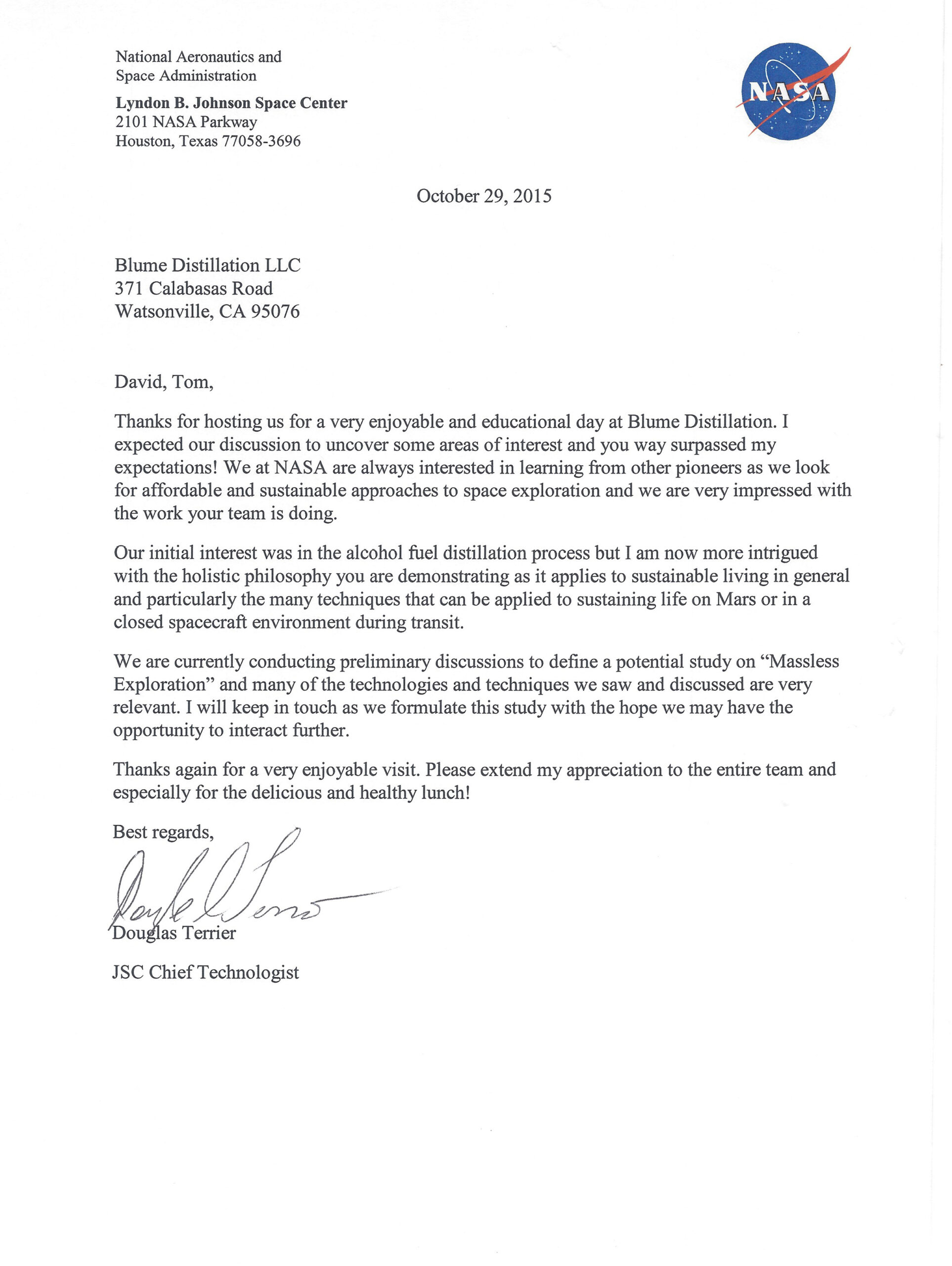
“Thanks for hosting us for a very enjoyable and educational day at Blume Distillation. I expected our discussion to uncover some areas of interest and you way surpassed my expectations! We at NASA are always interested in learning from other pioneers as we look for affordable and sustainable approaches to space exploration and we are very impressed with the work your team is doing. Our initial interest was in the alcohol fuel distillation process but I am now more intrigued with the holistic philosophy you are demonstrating as it applies to sustainable living in general and particularly the many techniques that can be applied to sustaining life on Mars or in a closed spacecraft environment during transit….” —Douglas Terrier, JSC Chief Technologist, NASA

David Blume Consulting & Speaking
Non-Commercial Permaculture Tools, References, and Resources

Non-Commercial Permaculture Tools, References, and Resources

This is a list of neutral, non-commercial links to public tools, references, and resources commonly used in permaculture study, design, and land stewardship. Inclusion here does not imply endorsement. These links are provided as starting points for exploration and observation.

Permaculture Info & Resources
Profitable Surplus: Sargassum Solutions

Profitable Surplus: Sargassum Solutions

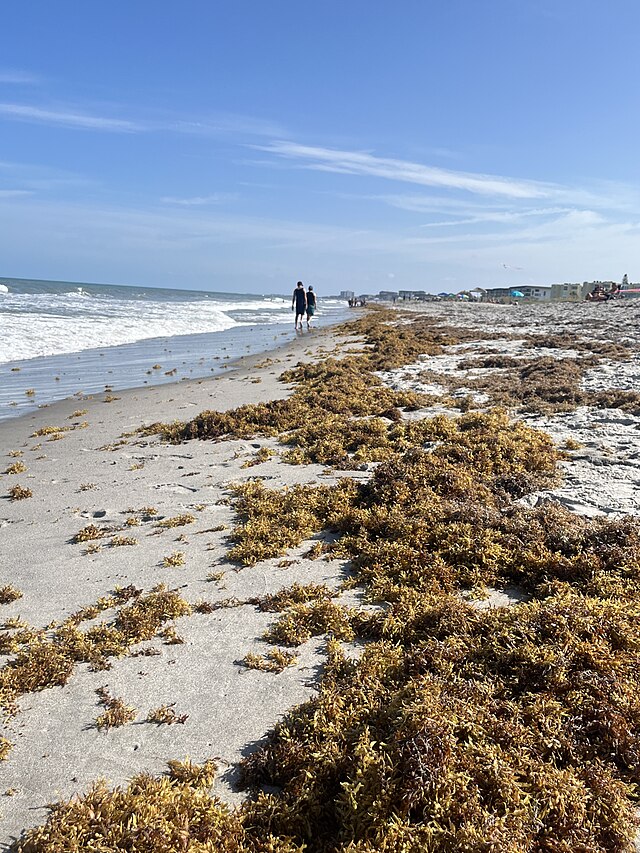
Mexicans may think it’s unlucky to have seaweed wash up on their beautiful beaches, but, looked at from the natural resource perspective, the country is truly fortunate to have a surplus of Sargassum seaweed! They just need to harvest it before it would ever reach the beach…. Harvesting the Sargassum from the coastal waters rather than after it reaches land is a lucrative business that also protects public health and tourism.

Organic Alcohol
David Blume

David Blume

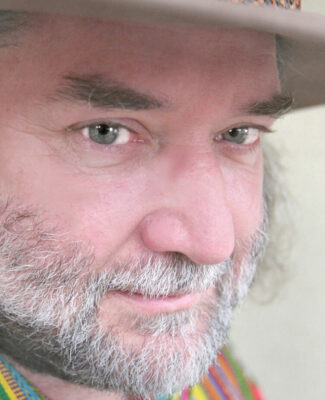
David Blume is a consultant and speaker with decades of deep experience with permaculture and regenerative agriculture. He earned his permaculture certificate directly from founder Bill Mollison. Dave is the acknowledged expert worldwide on organic alcohol production as part of ecological no-waste solutions that, replicated, solve so many of Earth’s seemingly unsolvable problems. He is the author of the classic Alcohol Can Be a Gas! Fueling an Ethanol Revolution for the 21st Century.

David Blume Consulting & Speaking
eBook Available for Alcohol Can Be a Gas! Fueling an Ethanol Revolution for the 21st Century

eBook Available for Alcohol Can Be a Gas! Fueling an Ethanol Revolution for the 21st Century

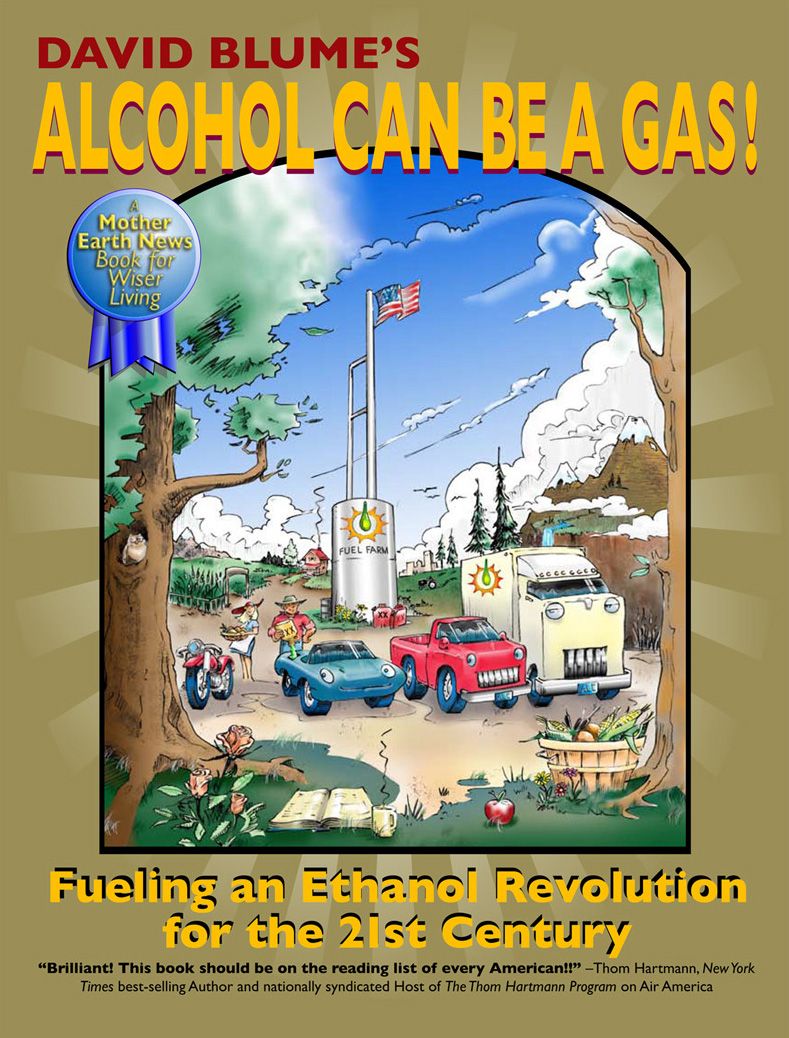
Alcohol Can Be a Gas! Fueling an Ethanol Revolution for the 21st Century is now available in digital format! It contains all of the content of the original hardcover version — aside from the index, which is no longer needed now that you can easily search the book! It’s in Kindle format and can be read on any device using a free reader. Alcohol Can Be a Gas! is an information-dense, highly readable, profusely illustrated manual, covering every aspect of alcohol fuel from history through crops, hands-on fuel production, and vehicle conversion. It’s the first comprehensive book on small- to farm-scale alcohol production and use written in 100 years. • Internally divided into six books, the single volume contains 640 8.5″ x 11” pages in its printed form, with more than 500 illustrations, charts, and photos, and sporting a 700-word glossary and a full index. It retains the original 1983 foreword by R. Buckminster Fuller. Alcohol Can Be A Gas! is a complete toolbox for farmers, green entrepreneurs, and activists to wrest control of our energy system from the Oilygarchy and put it back in the hands of the public.

Organic Alcohol
David Blume’s Appearances on  Coast to Coast A.M. Radio Show

David Blume’s Appearances on Coast to Coast A.M. Radio Show

Thirty-two appearances, so far. Check out the topics Dave talked about on this very popular show. “According to estimates by Talkers Magazine, Coast to Coast AM has a cumulative weekly audience of around 2.75 million unique listeners listening for at least five minutes, making it the most listened-to program in its time slot.” — Wikipedia

David Blume Consulting & Speaking
13 Reasons to Use Alcohol Fuel

13 Reasons to Use Alcohol Fuel

A quick look at reasons to use alcohol fuel instead of fossil fuels: 1. Almost every country can become energy-independent. Anywhere that has sunlight and land can produce alcohol from plants. Brazil, the fifth largest country in the world, imports no oil, since half its cars run on alcohol fuel made from sugarcane, grown on 1% of its land. 2. We can reverse global warming. Since alcohol is made from plants, its production takes carbon dioxide out of the air, sequestering it, with the result that it reverses the greenhouse effect (while potentially vastly improving the soil). Recent studies show that in a permaculturally designed mixed-crop alcohol fuel production system, the amount of greenhouse gases removed from the atmosphere by plants—and then exuded by plant roots into the soil as sugar—can be 13 times what is emitted by processing the crops and burning the alcohol in our cars. 3. We can revitalize the economy….

Organic Alcohol
Permaculture Info & Resources

Permaculture Info & Resources

Selected permaculture info, news, resources, and opportunities.

Permaculture Info & Resources
Organic Alcohol

Organic Alcohol

A collection of information and resources on organic alcohol production as part of an elegant solution to a variety of ecological problems.

Organic Alcohol
David Blume Biography

David Blume Biography

Dave and his father Jerry grew almost all the food their family ate, organically—on a city lot in San Francisco in the mid-’60s! Dave taught his first ecology class in 1970. He majored in Ecological Biology and Biosystematics at San Francisco State University while doing volunteer fieldwork with a number of non-profits, such as the Point Reyes Bird Observatory. He put himself through school by teaching backpacking and wildlife biology through open universities during the summers … In 1978, Dave was employed by NASA to work on an experimental solar self-sufficient energy, sewage treatment, and desalinization plant in the Virgin Islands. After solving many previously persistent problems in this system, he went to work for the Mother Earth News Eco Village in North Carolina, where he worked in a team using alternative building techniques … When the energy crisis of 1978-9 struck, Dave started the American Homegrown Fuel Co….

David Blume Consulting & Speaking
Speaking by David Blume

Speaking by David Blume

David Blume has long been a frequent keynote and plenary speaker at ecological and agricultural conferences in the Americas, and a popular interviewee on radio/podcasts. He has appeared on the hugely popular Coast to Coast AM Radio show 32 times, so far. He has spoken at the Bioneers Conference, Upper Midwest Organic Farmers Conference, Ecological Farming Conference, University of Mexico (Xalapa campus) International Forum on Globalization, Technology and Society Committee, San Francisco’s World Vegetarian Day, the Whole Life Expo (in a number of cities), the Omega Institute, Grow Your Own Conference, Veggie Fest in San Jose, Earthsave, Gaia-Song Ecological Living Conference, Plenary Speaker at the Ohio Ecological Food and Farming Association, Plenary speaker at the American Agriculture Movement convention, the American Corn Growers Association, the World Biomass Conference, the Solar Living Institute’s SolFest, and a host of smaller events including advanced training for USDA Master Gardeners….
Dave is a compelling speaker. Here are some testimonials from organizations that hosted Dave’s speaking engagements.

David Blume Consulting & Speaking
David Blume Consulting

David Blume Consulting

David Blume’s consulting work is wide-ranging, with projects large and small. In a typical investigation, he consulted with individuals and the government of Antigua, West Indies, on a combination water harvesting/reforestation project involving a permaculturally designed high value hardwood forest. In another project, for Quality Organic Nuts in Mexico, the goal was to meet with Macadamia nut farmers and government officials to determine the feasibility of organizing a 500 grower cooperative for exporting products.

Dave has consulted on a series of projects for the Government of Ghana in alternative fuels, training the country’s agricultural extension agents in organic farming and designing an ecological strategy to stop the advance of the Sahara Desert into the country….

David Blume Consulting & Speaking
David Blume CV

David Blume CV

Solutions for Challenging Environmental Problems. CONSULTING ON PROJECTS LARGE AND SMALL • Often surprisingly unique and always insightful •
Project feasibility studies • Environmental engineering system designs • Reduce/eliminate carbon and methane emission • Address climate change problems • Plan for remote (off-grid) locations • Solve land, air, and water problems caused by organic effluents from livestock and farm/business practices • Design, development, review, and guidance • Regenerative agriculture • Terrafarming • Waste optimization • Alternative fuel generation for resilience and autonomy • Repurposing of fallowed or greenfield operations • Soil reconstruction • Water and utility planning and water recovery….

David Blume Consulting & Speaking
What Is Permaculture?

What Is Permaculture?

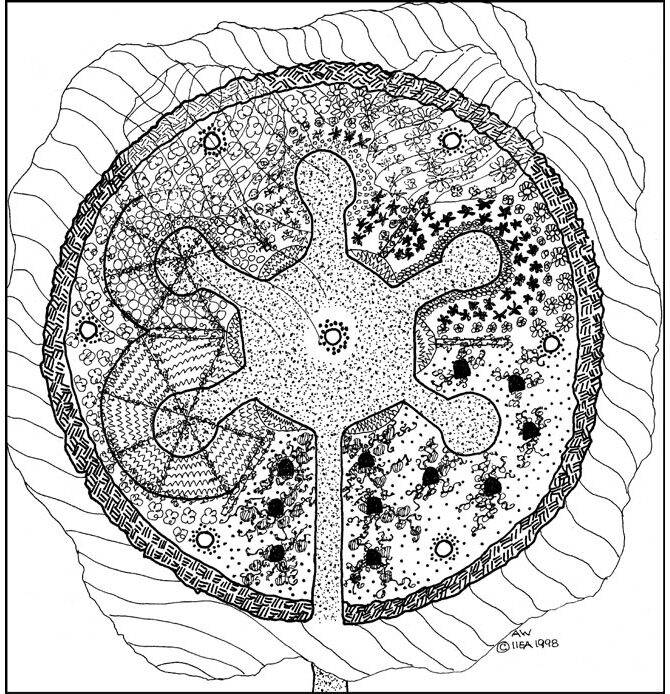
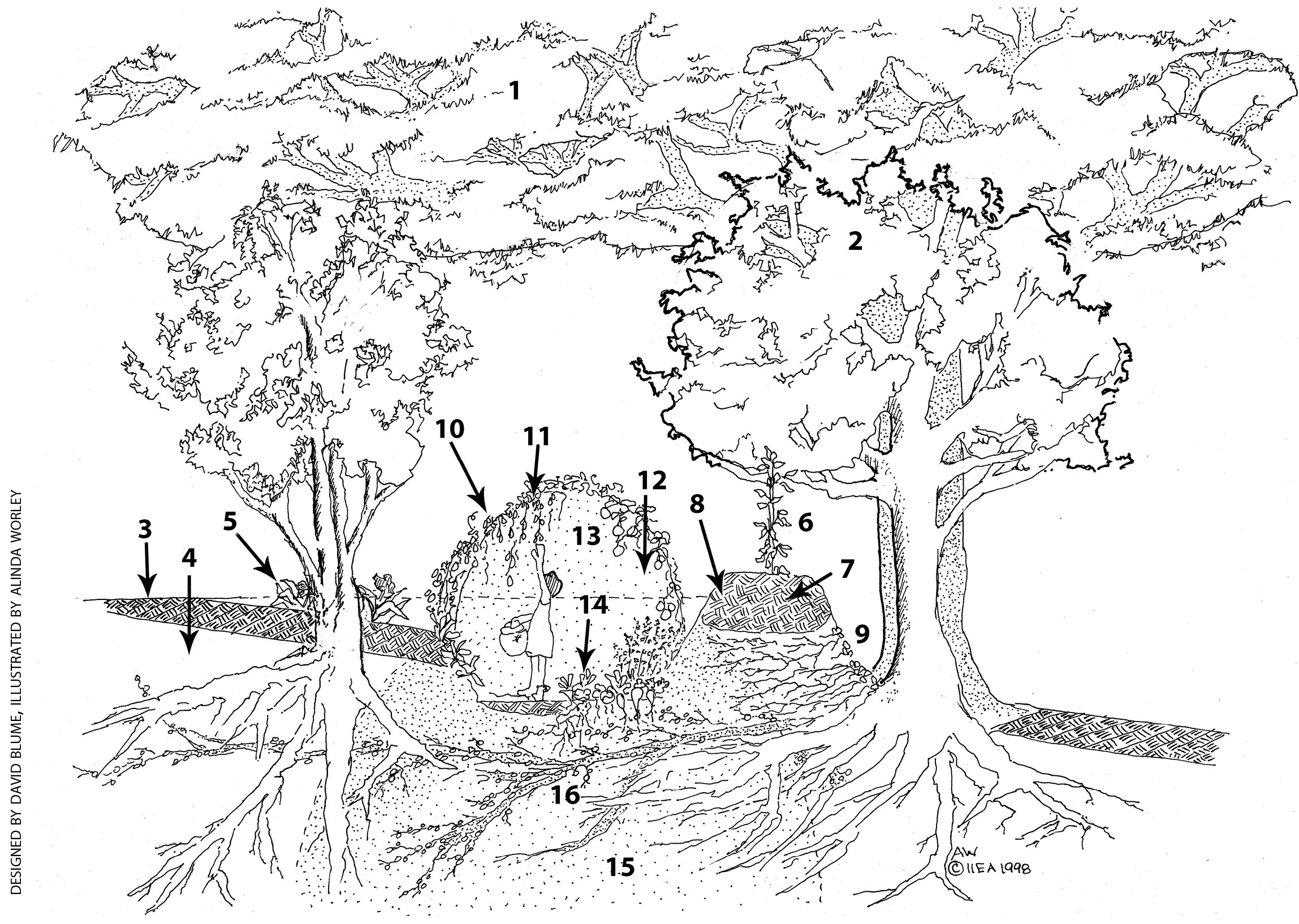
Permaculture is the art and science of designing human beings’ place in the environment. Permaculture design teaches you to understand and mirror the patterns found in healthy natural environments. You can then build profitable, productive, sustainable, cultivated ecosystems, which include people, and have the diversity, stability, and resilience of natural ecosystems. Permaculture designs can be applied to households, major agricultural enterprises, and even entire bioregions. Permaculture integrates disciplines relating to food, shelter, energy, water, trees/plants, wildlife, livestock, weather, waste management, economics and social sciences. These integrated designs create systems capable of yielding far more than the output of conventional systems. Permaculture can reclaim devastated lands, roll back deserts, build just social/economic systems, and design planet-based livelihoods.

Permaculture Info & Resources
R. Buckminster Fuller’s Foreword to Alcohol Can Be a Gas!

R. Buckminster Fuller’s Foreword to Alcohol Can Be a Gas!

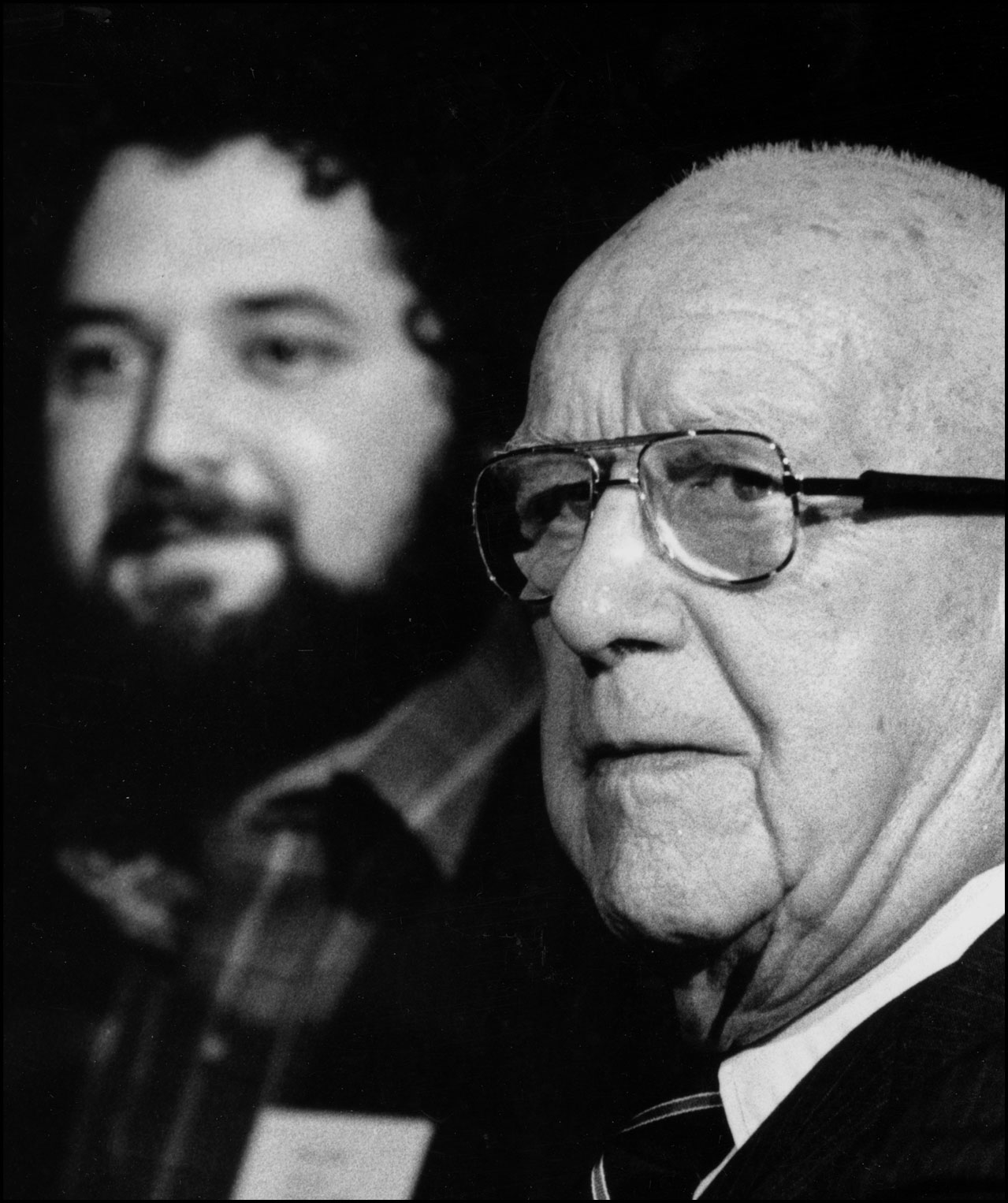
Bucky wrote the 1983 Foreword to the original version of my book, Alcohol Can Be a Gas! Fueling an Ethanol Revolution for the 21st Century. His influence has informed all my work across the decades. —David Blume

Organic Alcohol
The Permaculture Solution to Fossil Fuel Dependency

The Permaculture Solution to Fossil Fuel Dependency

Industrial agriculture and its components—oil-based fertilizers, pesticides, and herbicides—are harmful to the planet. A nationwide switch to organic farming is in order. But it can’t work if we maintain a monoculture-based system, with its present emphasis on corn farming. Much of America’s farmland is below 2% organic matter. At 2%, the soil biology collapses—and, with it, the fertility needed to grow crops. More and more chemical fertilizer is needed to prop up production on sterilized soil. A lot of people think that the “Green Revolution”—marked by the advent of monocultures, pesticides, herbicides, and chemical fertilizers some 60 years ago—produces more food per acre than older methods of agriculture. It emphatically does not. In fact, a Mexican campesino using simple hand tools to grow a polyculture of corn, beans, and squash can produce, on a dry-weight basis, far more food per acre than the farmer of the most modern U.S. Midwestern cornfield—food worth far more money on a net basis.

Organic Alcohol
Just How Inefficient Is Oil Production Anyway?

Just How Inefficient Is Oil Production Anyway?

University of Massachusetts biologist Jeffrey Dukes took a good hard look at what goes into making oil. Unlike other researchers, who appear to assume coal or crude oil are almost free forms of energy, Dukes studied just what Nature does to produce, and what man does to retrieve, crude oil.

Organic Alcohol
The Process and Benefits of Double Fermentation

The Process and Benefits of Double Fermentation

As part of our zero waste ethos at David Blume’s Whiskey Hill Farms & Science Center, we use two fermentation processes to produce alcohol and fertilizer. Instead of the current practice of treating most agricultural byproduct from agricultural operations as waste, this process turns this “waste” biomass into fertilizer and alcohol and reduces the waste stream going to the county landfill.

Organic Alcohol
Sustainable Agriculture’s Role in Climate Change

Sustainable Agriculture’s Role in Climate Change

I am often asked how I first learned about alcohol’s ability to run vehicles? I can still remember, as clear as a bell, talking about brewing beer (which was still illegal in 1974) with Doc Sweeney, one of my ecological biology professors at San Francisco State. He was infamous for telling students outrageous tall tales with a straight face just to see their reaction, or better yet, to see if he could get away with it.

Organic Alcohol
A Clear, Attainable Path to Thriving Without Fossil Fuels

A Clear, Attainable Path to Thriving Without Fossil Fuels

I am often accosted by people whom I would normally consider my colleagues. They are typically environmental activists informed by what they read on the Internet, people who watched An Inconvenient Truth, people who are aware of Peak Oil, sustainable agriculture, and climate change. They say “Dave, don’t you know that fossil fuels, (and fossil-fuel-based fertilizers) are beginning to run out and ‘There Is No Alternative’? [My acronym for this is “TINA”.] The only thing we can do is stop driving, stop using energy, walk to our green jobs in the new localized economy, and go back to farming by hand. Power down….”

Organic Alcohol
David Blume’s Clean Homegrown Energy

David Blume’s Clean Homegrown Energy

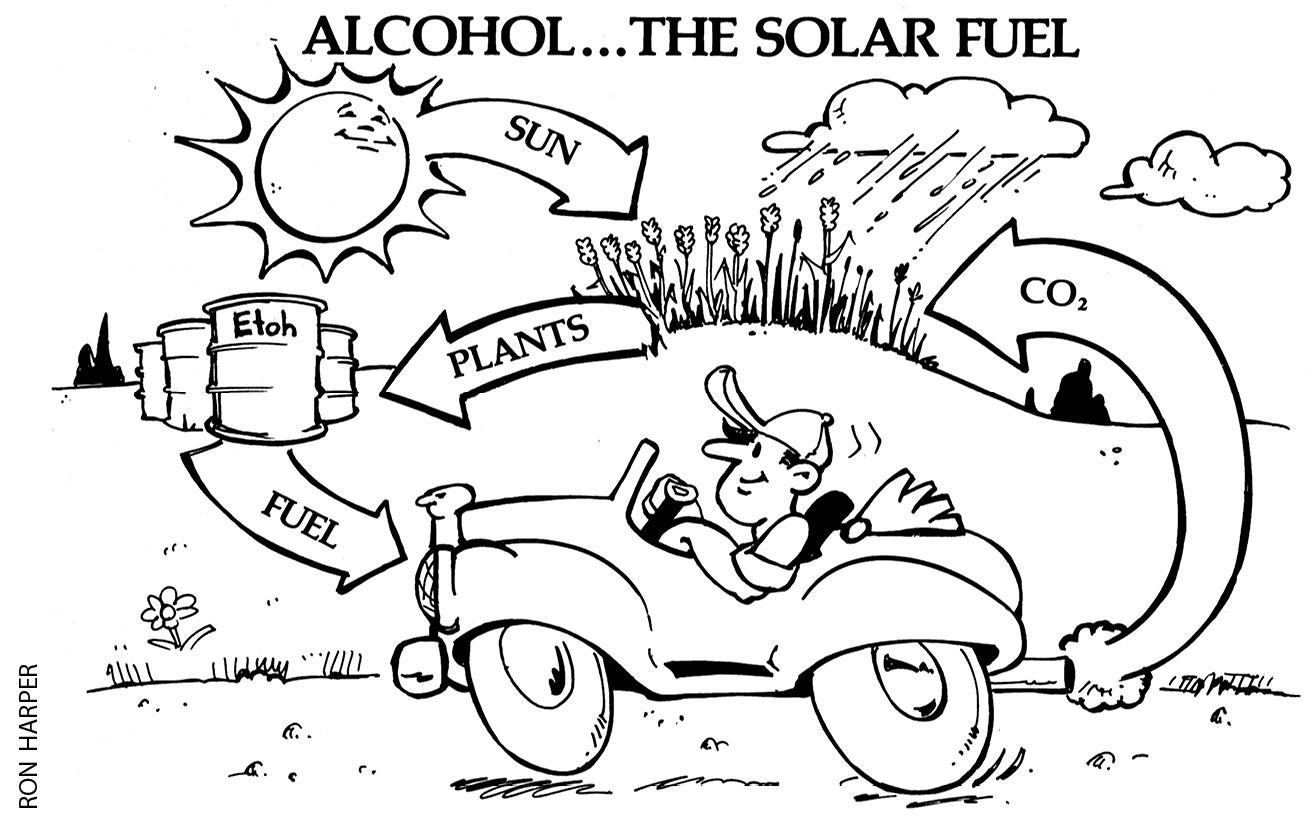
We know the solution to fossil fuel dependency. With permaculture design and practices, we can reverse global warming. We can convert our energy use from Earth-destroying fossil fuels to ecological, local-scale alcohol fuel. Since alcohol is made from plants, its production takes carbon dioxide out of the air, sequestering it, with the result that it reverses the greenhouse effect (while potentially vastly improving the soil).

Organic Alcohol
About Carbon Dioxide in the Air

About Carbon Dioxide in the Air

Alcohol combustion and fermentation both emit carbon dioxide, and anti-alcohol propagandists are quick to allege that distillation and use of alcohol as a fuel aggravates the already high levels of CO2 in the air. But permaculturally designed alcohol fuel production actually allows us to reduce carbon dioxide emissions.

Organic Alcohol
Meat-Eating Trees

Meat-Eating Trees

Springtails are microscopic creatures that jump through the soil using a powerful tail; they are very common in the rhizosphere (root zone) of plants and trees. Scientists studying springtail feeding habits wanted to know how much of the mycorrhizal fungi springtails consumed. This experiment was analogous to seeing how much pizza a teenager could eat. But instead of the expected result, the pizza jumped off the table and ate the teenager!

Organic Alcohol

David Blume’s Classic Talk on Alcohol Fuel

This compelling two-and-a-half-hour talk by David Blume provides an entertaining and thorough introduction to the topic of alcohol fuel.

Organic Alcohol

David Blume: Flex-Fuel Cars and Alcohol Cookstoves

A short video introduction to some of the ways that alcohol fuel — also called ethanol — can transform people’s lives and the planet.

Organic Alcohol

“Farmer Dave” Blume Gives a Tour of the Greenhouses at Whiskey Hill Farms

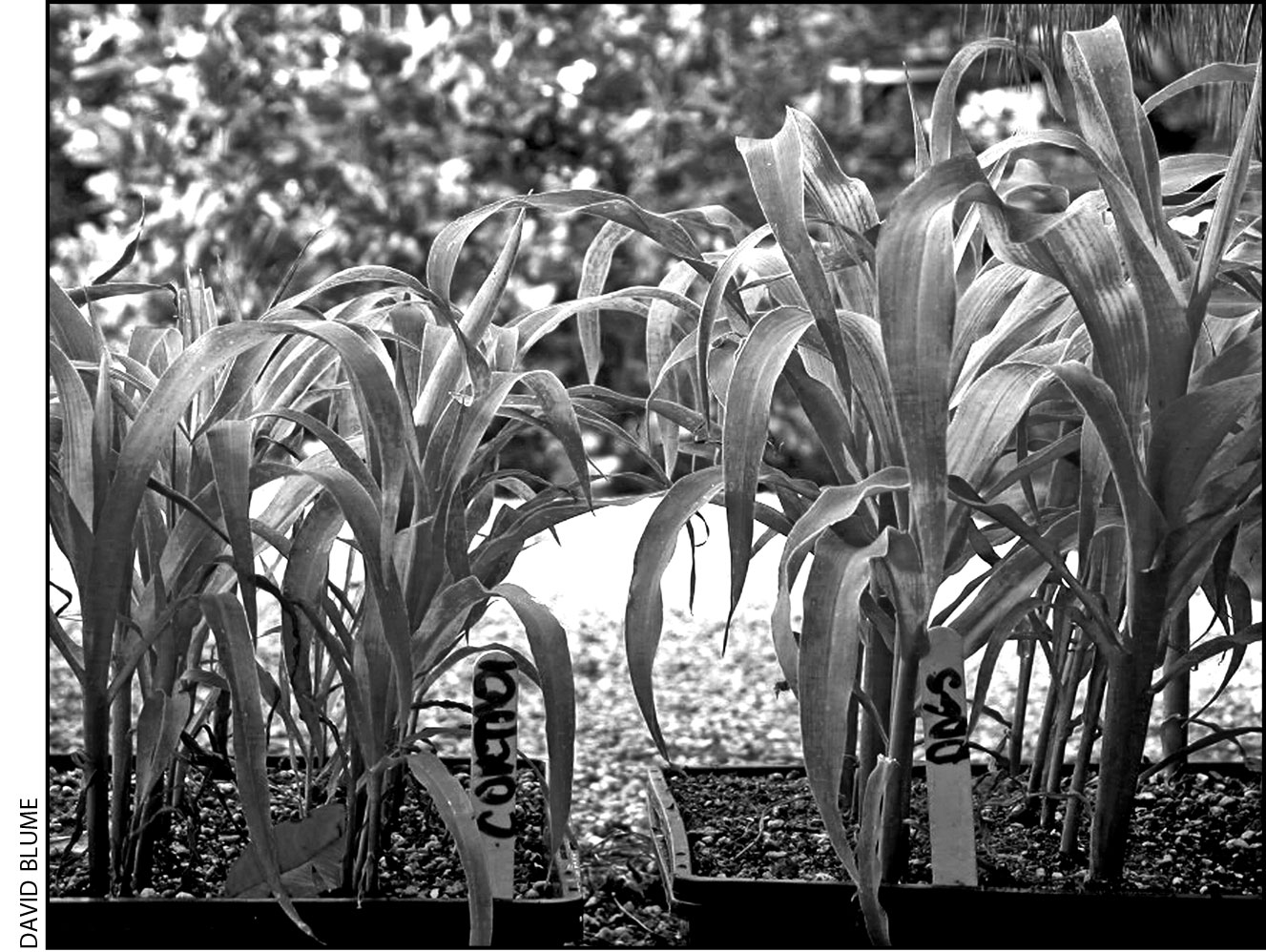
David Blume — farmer, author, teacher, inventor, researcher — takes us on a tour of his organic no-waste greenhouse set-up at Whiskey Hill Farms, with its innovative regenerative agricultural technology.

Permaculture Info & Resources

How George Washington Encouraged Moonshining

In this short video, David Blume explains how George Washington inadvertently encouraged the making of moonshine.

Organic Alcohol
Whiskey Hill Farms’ Clean-Fuel Revolution

Whiskey Hill Farms’ Clean-Fuel Revolution

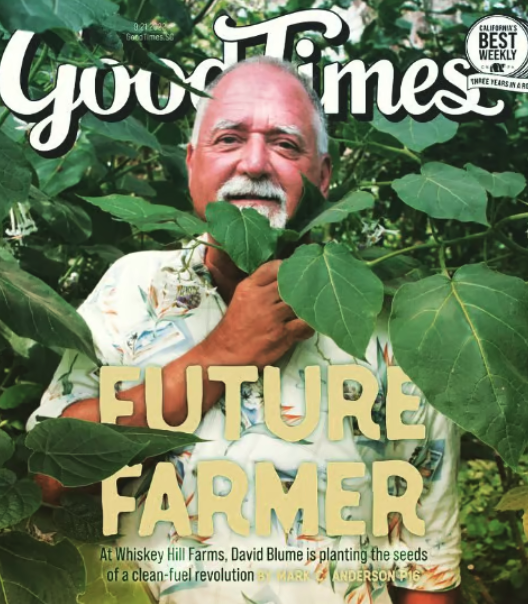
We are pleased to share, with permission, the article Whiskey Hill Farms’ Clean-Fuel Revolution from the Good Times newsletter, by Mark C. Anderson. • The Watsonville operation’s mastermind David Blume’s big picture also involves preventing food waste and hunger on a global level • Whiskey Hills and Blume Industries can convert everything from walnut husks to surplus candy into fuel, pharmaceutical-grade ethanol and spirits of varying proofs. • David Blume’s closed-loop gospel has taken him all over the world, but a main focus of his current work is educating Watsonville-area farmers on permaculture practices. • Way out off a rural road in Watsonville, a full-on tropical forest bursts with life. Hundreds of fruiting plants, 450 all told, fill a large greenhouse. The jungle pops with passionfruit blossoms, big bunches of bananas, mountain papayas, tropical spinach and multiple types of South American “tree tomatoes” (aka tomarillos). But it’s just one of the fascinating elements at Whiskey Hill Farms. So many eye-catching things are thriving here, in fact, that it can be easy to miss the big picture—even if the big picture involves preventing war, food waste, hunger and carbon monoxide poisoning.

Organic Alcohol
Food and Permaculture

Food and Permaculture

—By David Blume. I wrote this in response to post to the bioregional listserve from a woman at ATTRA who said something like “Of course you couldn’t feed the world with such a hippy-dippy, hunter-gatherer, landscape system like permaculture.” Well that got me a little steamed so this is what I wrote. Dear Folks, I would like to inject some real world experience into this otherwise abstract discussion of food and permaculture….

Permaculture Info & Resources
Contact David Blume.
Also see WhiskeyHillFarms.com and AlcoholCanBeAGas.com.

Copyright © 2025 permaculture.com.

Powered by PressBook Premium theme