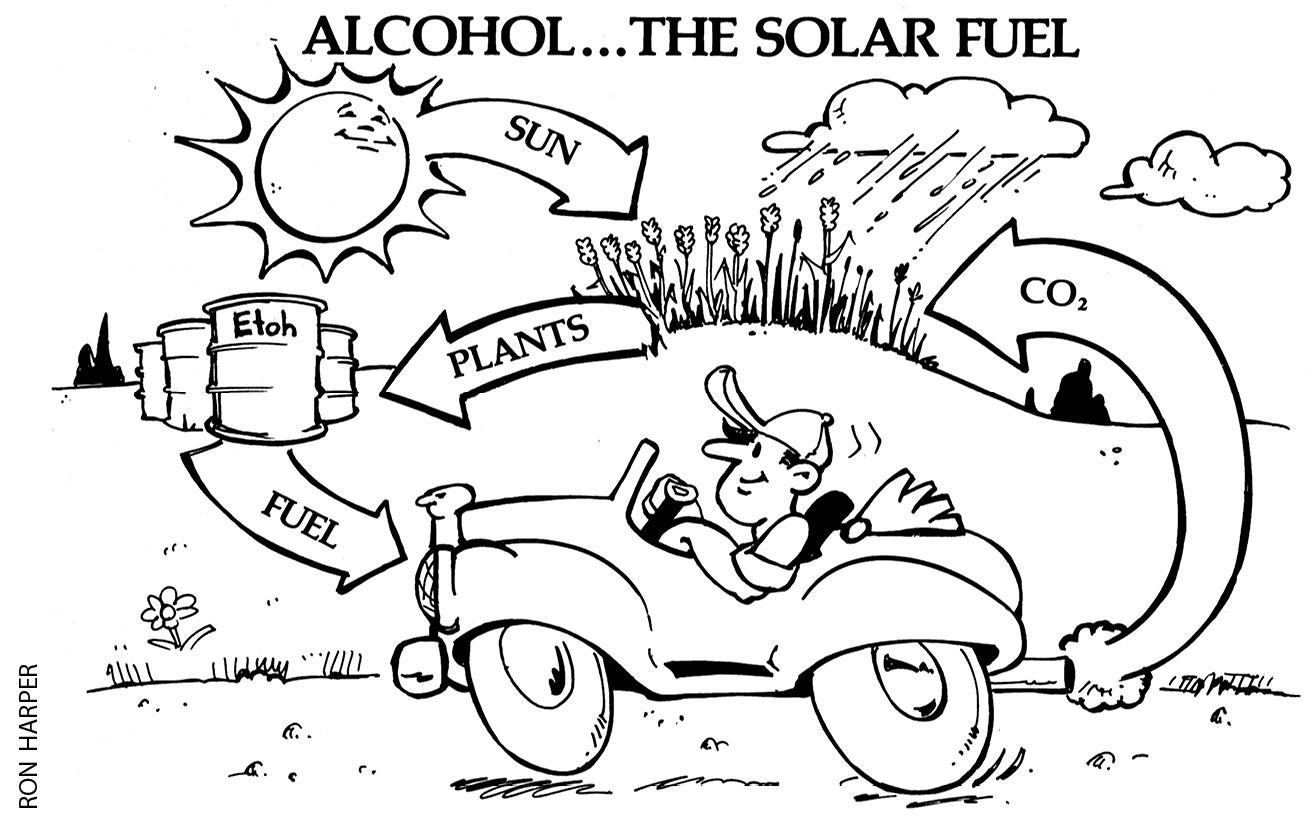
Alcohol combustion and fermentation both emit carbon dioxide, and anti-alcohol propagandists are quick to allege that distillation and use of alcohol as a fuel aggravates the already high levels of CO2 in the air. In fact, in simple terms, the production and use of alcohol neither reduces nor increases the atmosphere’s CO2. In a properly designed system, the amount of CO2 and water emitted during fermentation and from exhaust is precisely the amount of both chemicals that the next year’s crop of fuel plants needs to make the same amount of fuel once again.
Photosynthesis by plants takes carbon dioxide, water, and sunlight to make carbohydrates. Production and use of alcohol returns the carbon dioxide and water to the air, and produces work with the solar energy. It’s essentially a closed cycle.
But the system, facilitated by alcohol fuel production, actually allows us to reduce carbon dioxide emissions.35 How? The growing of plants actually ties up many times more carbon dioxide than is created in the production and use of the alcohol. The portion of the plant that becomes fuel is not all of the plant. All of the vegetative portions of a plant, from roots to stalk and leaves, are made of sequestered carbon dioxide and water, primarily the carbohydrate cellulose. Plants sequester up to ten times more carbon dioxide from the air, compared to just the balanced CO2 recycling from the part of the crop (e.g., grain) that is used to make the alcohol (see Book 1, Chapter 3). Plants also exude up to 80% of the carbon they absorb from the air through their roots, as sugar, to feed beneficial fungi and bacteria.
The implications are staggering. If a balance were struck (as it could be using alcohol as fuel), the oceans and plants would absorb our excess CO2 over a period of 50 to 100 years. Increasing plant growth by converting from a hydrocarbon to a carbohydrate economy could reduce atmospheric carbon dioxide far more quickly. A crash program of reforestation, energy crop planting, and ocean kelp farming could rapidly reverse global warming!
At present, it’s not possible for the Earth’s system to absorb all the CO2 being emitted from fossil transportation fuel and power plant exhaust. This carbon dioxide is not recycled as in the alcohol system, because it is made of plants that were living millions of years ago and now have become fossil fuels. When they are burned and produce carbon dioxide and water, this adds a burden to our atmosphere. If we don’t seek equilibrium, we can anticipate further massive changes in weather and a nearly irreversible heating trend in the environment, which could last centuries or even thousands of years.
More About Organic Alcohol

Ban on Home Distilling Declared Unconstitutional

Free eBook: Alcohol Can Be a Gas!

Alcohol Can Be a Gas!


Profitable Surplus: Sargassum Solutions
eBook Available for Alcohol Can Be a Gas! Fueling an Ethanol Revolution for the 21st Century

David Blume’s Appearances on Coast to Coast A.M. Radio Show

13 Reasons to Use Alcohol Fuel
Organic Alcohol
R. Buckminster Fuller’s Foreword to Alcohol Can Be a Gas!
Sustainable Agriculture’s Role in Climate Change

A Clear, Attainable Path to Thriving Without Fossil Fuels
The Permaculture Solution to Fossil Fuel Dependency

Just How Inefficient Is Oil Production Anyway?

The Process and Benefits of Double Fermentation
David Blume’s Clean Homegrown Energy
Meat-Eating Trees

David Blume’s Classic Talk on Alcohol Fuel